Breast cancer care is entering a transformative phase. Discover why this is very important for patients and everyone involved

New Chapter in Breast Cancer Screening: Long-Term Care for Biopsy Patients
October 17, 2025
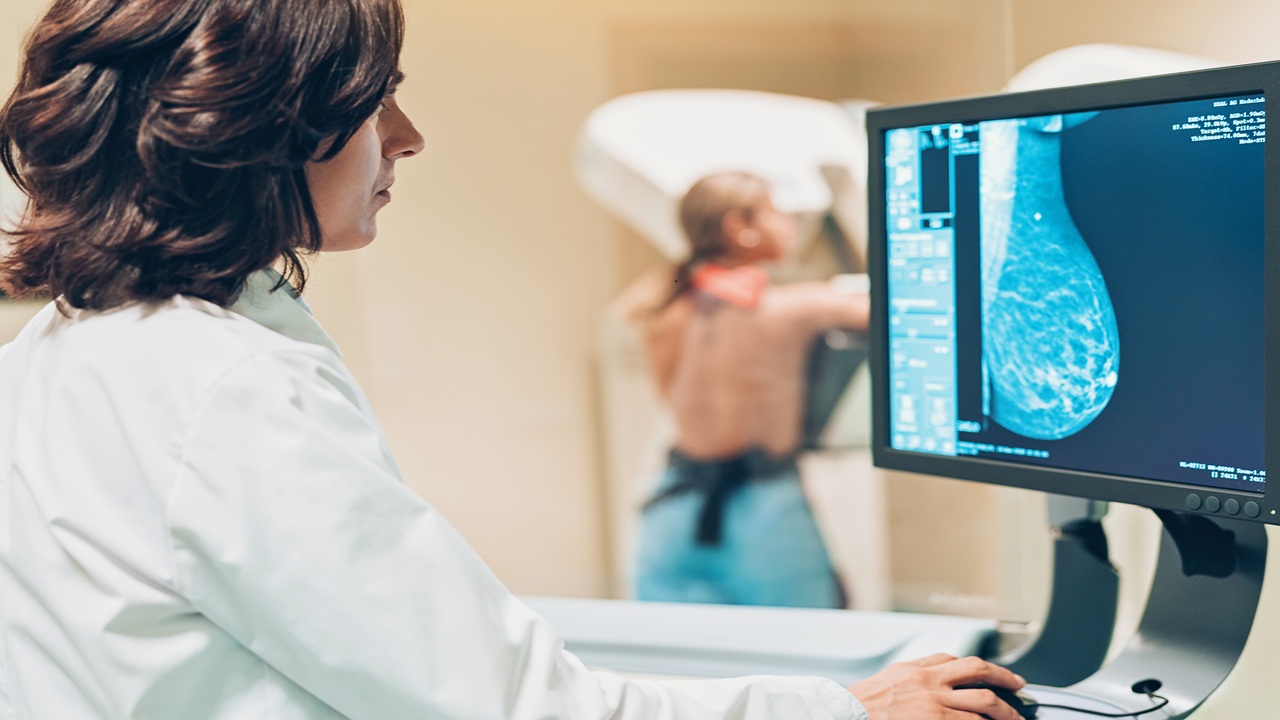
Breast cancer care is entering a transformative phase, one that shifts the focus from early detection to comprehensive, long-term care for high-risk and biopsy patients. Every year over 2 million women undergo breast biopsies, resulting in over 400,000 women diagnosed with breast cancer. For these women, the need for innovative tools and methods to ensure consistent post-biopsy monitoring has never been greater
Dense breast tissue poses a significant challenge to traditional mammograms, as it can obscure cancerous growths, leading to missed diagnoses in up to 40% of cases. This limitation necessitates supplemental screening methods, with MRI emerging as the gold standard for imaging in high-risk patients.
Enter Vizmark’s VM1 Soft Tissue Marker
The VM1 marker is revolutionizing post-biopsy care by offering a permanent solution for long-term monitoring. Designed specifically for use with MRI, this innovative marker overcomes the limitations of traditional biopsy markers. The VM1 marker:
- Enhances Visibility Across Modalities: While optimized for MRI, the marker is also visible on mammography and ultrasound, providing a versatile tool for ongoing care.
- Permanently Placed for Long-Term Monitoring: Its design ensures it remains functional and effective over the patient’s lifetime, offering consistent visualization of biopsy sites.
- Addresses Dense Tissue Challenges: MRI’s sensitivity is unaffected by dense tissue, making the VM1 marker particularly valuable for high-risk women
- Changing the Paradigm of Long-Term Care
Historically, breast cancer care has focused on early detection and initial treatment. However, this approach often leaves high-risk women without a structured plan for long-term monitoring.
The VM1 marker allows a physician greater latitude providing a clear reference for tracking changes in tissue over time. This allows clinicians to monitor for changes and recurrences or assess therapy effectiveness with unparalleled accuracy
Legislative and Technological Support
With new federal regulations, such as the Mammography Quality Standards Act, requiring transparency about breast density risks starting in 2024, and AI tools enhancing the precision of imaging, the healthcare landscape is aligning with the need for advanced post-biopsy care. The VM1 marker complements these advancements, bridging the gap between detection and ongoing care.
The Path Forward
The integration of MRI-based markers like VM1 into treatment plans represents a shift towards personalized, lifelong breast cancer care. For high-risk women, the ability to rely on consistent, non-invasive monitoring tools offers peace of mind and the best chance of thriving after a diagnosis.
This evolution in care reflects a commitment to improving outcomes not just at the point of diagnosis but throughout a patient’s journey. It is no longer just about survival; it’s about providing every woman the opportunity to live with confidence in her health and future.
Vizmark VM1 Soft Tissue Marker – Patient FAQ
What is the Vizmark VM1 marker?
The VM1 marker is an innovative device placed in your breast during a biopsy. It marks the spot where tissue was removed so doctors can easily find it later. VM1 was designed to be clearly visible on MRI, mammography, and ultrasound — allowing physicians and patients more latitude in follow-up care.
When is the marker placed during my biopsy?
The marker is placed at the time of the breast biopsy, immediately after the tissue samples are obtained and before the biopsy needle is withdrawn from the lesion. This is standard practice for image-guided core needle biopsies, including those performed under stereotactic, ultrasound, or MRI guidance.
Is the placement painful and does it add time to the biopsy?
Breast biopsy and marker placement are typically associated with mild pain or discomfort, but most patients do not experience significant pain during the procedure. Local anesthetic is routinely administered, which effectively numbs the area; tissue sampling, but not sharp pain.[1-3] Marker (clip) placement is performed through the same needle tract and does not add significant discomfort.
Will I feel it in my breast afterward?
No, the VM1 marker is very small and soft. Once placed, you won’t be able to feel it.
Is it safe to stay in my body permanently?
It is safe for a breast marker to remain in the body permanently after a breast biopsy and marker placement, provided the biopsy result is benign and imaging-pathology concordance is established. Breast markers are designed to be biocompatible and inert, with long-term safety demonstrated in clinical practice.
Can it interfere with medical devices or airport security?
No, breast markers including VM1 marker does not set off metal detectors and will not interfere with pacemakers or other implants.
How does it help with imaging?
As the VM1 marker is visible on MRI, mammogram, and ultrasound, the marker gives your doctor a clear “roadmap” of where your biopsy was done. This makes it easier to track and monitor changes over time.
Why is the VM1 marker especially helpful if I have dense breast tissue?
Dense breast tissue can make it harder for doctors to see cancers on mammograms. The VM1 marker works well with MRI, which is not affected by breast density, giving you the most accurate monitoring possible.
Will the VM1 marker affect surgery, radiation, or breastfeeding?
Placement of breast markers during a breast biopsy is recommended to facilitate subsequent surgery and tumor localization, and does not interfere with surgery when appropriately targeted
How long does the VM1 marker last?
The VM1 marker is designed as a permanent breast marker and point of reference for your medical team continued monitoring.
Do I need to tell medical staff about it before future imaging?
Yes, clear communication of prior breast biopsy and marker placement is critical for accurate imaging interpretation, appropriate follow-up, and optimal multidisciplinary management in breast disease.
Is it covered by insurance?
Most insurance typically covers breast biopsy and marker placement, but the extent of coverage and patient financial responsibility depends on the insurance plan and local regulations. The NCCN guidelines support the medical necessity of these procedures, which is the basis for coverage by most payers.
In most cases, the VM1 marker is included as part of your biopsy procedure and is covered by insurance. Your care team can confirm details for you.
What’s the main benefit of a breast biopsy marker for the patient?
The main benefit of marker placement for a patient who has undergone a breast biopsy is precise localization of the biopsy site for future management, including surgical excision, follow-up imaging, and multidisciplinary care.
Join the Revolution in Women’s Health
As VM-1 sets a new standard for post-biopsy care, we’re not just improving technology—we’re improving lives.
About VizMark
Our team, led by radiologist and women’s health advocate Dr. Michael T. Nelson, created VM-1 improve imaging under MRI necessary for high risk patients. Through years of research and collaboration, we’ve designed a marker that eliminates the challenges of traditional solutions, offering better outcomes for patients and providers alike.

Dr. Michael Nelson
Founder and primary inventor, Dr. Nelson is a Board-Certified Radiologist, former U.S. Navy Flight Surgeon, and Professor of Radiology at the University of Minnesota. A leader in Mammography, Interventional Radiology, and Women’s Health, he co-founded the Jane Brattain Breast Center at Park Nicollet Medical Center.
Dr. Michael Nelson
Founder, Chief Medical Officer, and radiology expert

Kim Nelson
Accomplished senior executive and board member with 30+ years in high-tech, leading business growth, revenue expansion, and successful exits, including roles at Oracle and Primus Knowledge (IPO).
Kim Nelson
CEO with a proven track record of driving innovation

Tom Murphy
With 30+ years in medical device sales, operations, and management, Mr. Murphy has deep expertise in the tumor marker space, leading operations and sales at Mermaid Medical, Argon Medical, and Angiotech.
Tom Murphy
VP of Operations, tumor marker specialist

Steve Karel
A biotech senior executive with startup experience, Mr. Karel has held roles as CEO, CFO, and SVP of Business Development. He brings expertise in finance, fundraising, corporate development, and R&D, strengthening VizMark’s operations and growth.
Steve Karel
CFO with deep expertise in medical finance

Suite 150, 10580 Wayzata Blvd, Plymouth, MN 55305