Not all breast biopsy markers are equal on MRI and the artifact difference can be significant.

Which Breast Markers Produce the Least MRI Artifacts?
February 24, 2026
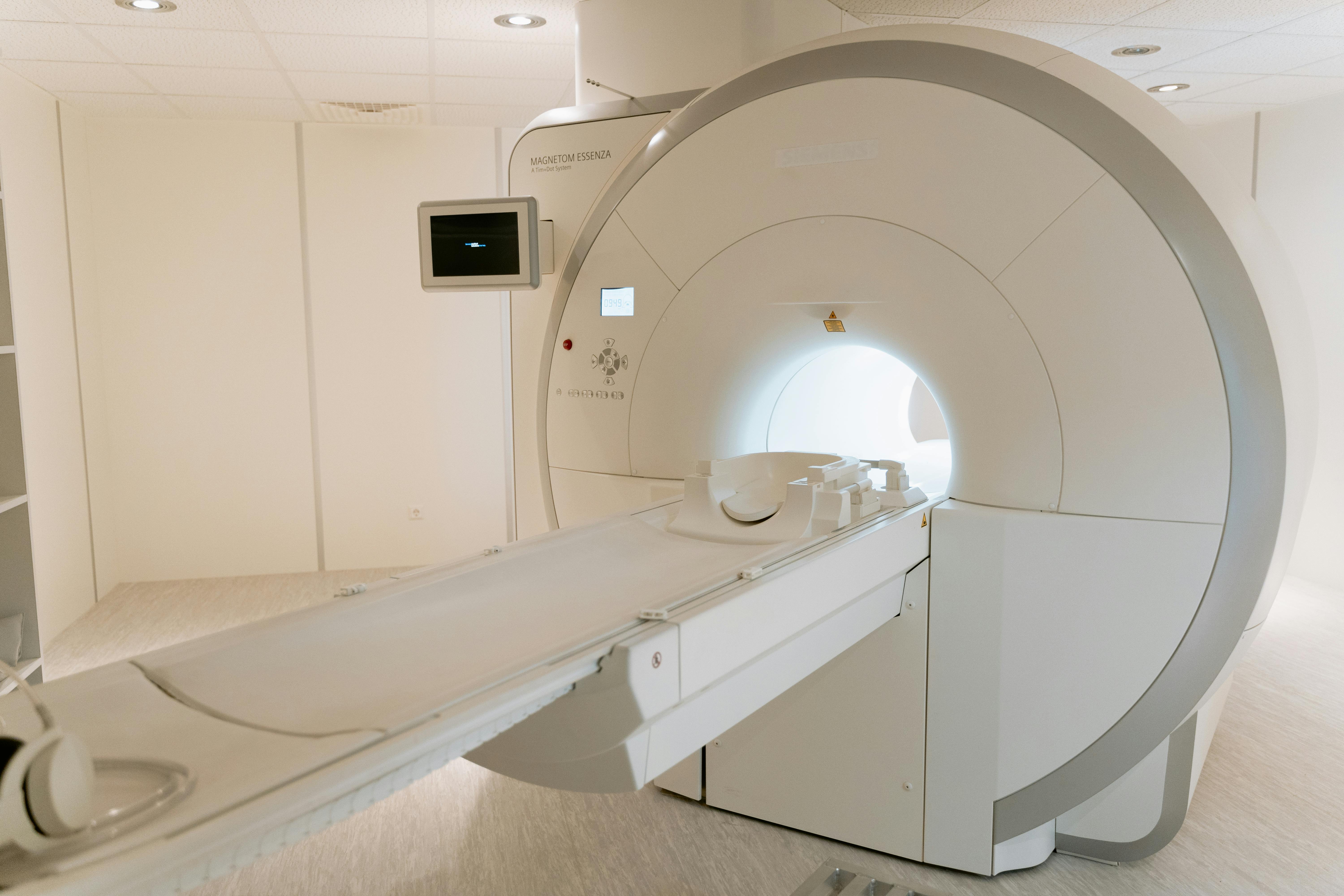
Breast biopsy markers were originally designed for mammography-guided localization, not for the multimodality imaging environment that defines modern breast care. As MRI has become central to staging, neoadjuvant monitoring, and high-risk surveillance, the limitations of traditional metal clips have become increasingly apparent.
Today, radiologists are asking a critical question: Which breast markers produce the least MRI artifacts—and are they the best markers for long-term, multimodality care?
Why Metallic Markers Create MRI Artifacts
Traditional titanium or stainless-steel clips create susceptibility artifacts on MRI. These artifacts:
- Produce signal voids extending up to 10 mm
- Distort local magnetic fields
- Disrupt fat suppression
- Obscure adjacent tissue
These artifacts can mask residual tumor, particularly concerning given that retained markers may be present in patients with residual malignancy after surgery.
For radiologists, this creates a diagnostic blind spot exactly where clarity is most important: at the original tumor bed.
The Evolution Toward Non-Metal Markers
To reduce MRI artifact, manufacturers began developing markers with:
- Non-metal coatings
- Ceramic components
- Polymer-based materials
Studies have shown that fully non-metallic markers produce significantly smaller MRI artifacts compared to metallic clips. Rather than generating signal voids, advanced designs aim to produce either minimal disturbance or positive MRI contrast.
This evolution reflects a shift in priorities. The best markers today are no longer judged solely by mammographic visibility, but by their ability to perform across:
- Mammography
- Digital breast tomosynthesis
- Ultrasound
- MRI
One of the most advanced examples of this evolution is VizMark’s VM1, a biocompatible, non-metal PEEK-based marker engineered specifically for multimodality imaging. Unlike traditional clips that rely on metal density for visibility, VM1 incorporates a radiopaque polymer structure and a sealed gadolinium-based component to generate positive MRI contrast without susceptibility artifact.
What Makes a Marker Produce Less MRI Artifact?
Markers that generate the least MRI artifacts typically share three characteristics:
1. Non-Ferromagnetic Materials
Polymers such as PEEK (polyetheretherketone) avoid the magnetic susceptibility that causes distortion.
2. Radiopacity Without Metal Bulk
Materials like barium sulfate can provide mammographic visibility without introducing magnetic distortion.
3. Positive MRI Contrast Mechanisms
Some advanced markers incorporate encapsulated contrast agents, enabling visibility on MRI without creating signal voids.
This approach represents a paradigm shift: instead of creating a “shadow” on MRI, the marker becomes clearly visible.
Clinical Impact: Why Artifact Reduction Matters
An artifact-free, multimodality-visible marker fundamentally transforms the radiologist’s pathway.
Improved Diagnostic Accuracy
Without signal voids, radiologists can:
- Assess residual disease more confidently
- Evaluate treatment response on serial MRI
- Reduce uncertainty near the biopsy site
Streamlined Multimodality Correlation
Metal clips look different on every modality:
- Bright on mammography
- Shadowing on ultrasound
- Dark void on MRI
Non-metal markers with consistent imaging appearance eliminate this cross-platform confusion.
Better Neoadjuvant Monitoring
MRI is essential for tracking tumor regression during chemotherapy. Artifact-free markers allow precise measurement without interference.
Enhanced Long-Term Surveillance
High-risk patients (dense breasts, young age at diagnosis, genetic mutations) often require alternating MRI and mammography for years. Stable, artifact-free markers improve interpretive confidence across decades of imaging.
Are Non-Metal Markers the Best Markers for MRI?
For MRI performance specifically, fully non-metal markers consistently produce the least artifacts.
However, the best markers overall must balance:
- MRI clarity
- Mammographic conspicuity
- Ultrasound visibility
- Migration resistance
- Long-term biocompatibility
The newest generation of non-metal PEEK-based markers addresses many of these requirements while minimizing MRI distortion
The Future of Breast Marker Technology
Breast imaging is increasingly multimodal. MRI is no longer optional in many patient pathways—it is foundational.
As a result, the best markers are those that:
- Do not compromise MRI
- Provide stable long-term positioning
- Remain clearly visible across all modalities
- Reduce workflow inefficiencies
Non-metal, artifact-minimizing designs represent the logical evolution of biopsy site marking technology.
The question is no longer whether MRI artifacts are acceptable, it’s whether we can eliminate them.
FAQ
Which breast biopsy markers cause the least MRI artifacts?
Fully non-metal markers made from polymer materials such as PEEK, like VizMark’s VM1, produce the least MRI artifacts. They avoid magnetic susceptibility effects that cause signal voids and distortion with traditional metal clips..
Why do metal breast markers create MRI signal voids?
Metal markers disrupt the magnetic field inside the MRI scanner, creating susceptibility artifacts. These artifacts appear as dark areas (signal voids) that can obscure surrounding breast tissue.
Are non-metal breast markers better for long-term surveillance?
Yes. Non-metal markers reduce MRI artifacts, allow clearer evaluation of the tumor bed, and improve multimodality correlation during staging, treatment monitoring, and long-term surveillance.
Join the Revolution in Women’s Health
As VM-1 sets a new standard for post-biopsy care, we’re not just improving technology—we’re improving lives.
About VizMark
Our team, led by radiologist and women’s health advocate Dr. Michael T. Nelson, created VM-1 improve imaging under MRI necessary for high risk patients. Through years of research and collaboration, we’ve designed a marker that eliminates the challenges of traditional solutions, offering better outcomes for patients and providers alike.

Dr. Michael Nelson
Founder and primary inventor, Dr. Nelson is a Board-Certified Radiologist, former U.S. Navy Flight Surgeon, and Professor of Radiology at the University of Minnesota. A leader in Mammography, Interventional Radiology, and Women’s Health, he co-founded the Jane Brattain Breast Center at Park Nicollet Medical Center.
Dr. Michael Nelson
Founder, Chief Medical Officer, and radiology expert

Kim Nelson
Accomplished senior executive and board member with 30+ years in high-tech, leading business growth, revenue expansion, and successful exits, including roles at Oracle and Primus Knowledge (IPO).
Kim Nelson
CEO with a proven track record of driving innovation

Tom Murphy
With 30+ years in medical device sales, operations, and management, Mr. Murphy has deep expertise in the tumor marker space, leading operations and sales at Mermaid Medical, Argon Medical, and Angiotech.
Tom Murphy
VP of Operations, tumor marker specialist

Steve Karel
A biotech senior executive with startup experience, Mr. Karel has held roles as CEO, CFO, and SVP of Business Development. He brings expertise in finance, fundraising, corporate development, and R&D, strengthening VizMark’s operations and growth.
Steve Karel
CFO with deep expertise in medical finance

Suite 150, 10580 Wayzata Blvd, Plymouth, MN 55305